
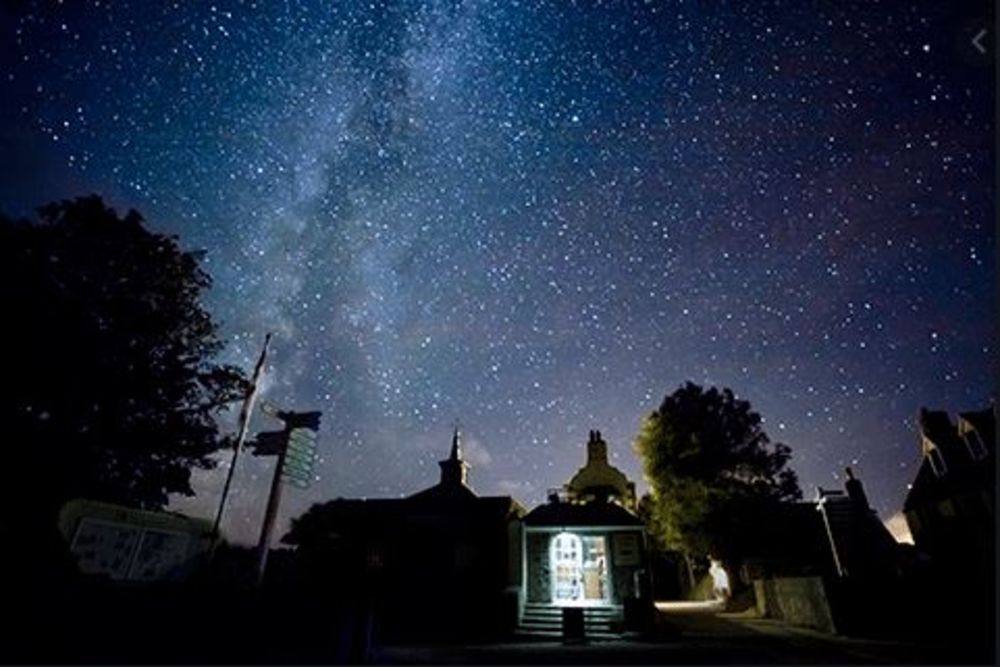
Over the half-term break, islanders are encouraged to look to the stars to help astronomers better understand the loss of the night sky to light pollution.
The Astronomy Section of La Societe Guernesiaise is encouraging islanders to look-up during lockdown, and do a bit of star-gazing.
It says while we are all familiar with air, water and land pollution, light contamination is often overlooked as many people have become used to artificial lighting at night-time.
Astronomers are encouraging islanders to take part in the Star Count Campaign.
Up until 14 February, you can get involved in this family-friendly activity from home wherever you may live.
The instructions are to look to the South on a clear sky and find the four corners of the constellation of Orion, which are the four brightest stars.
Betelgeuse is an intense red/orange colour (you may know this star as 'Beetle-Juice'), Bellatrix (a name which Harry Potter fans may recognize), Rigel (the brightest star in Orion that scientists think may be up to 300,000 times brighter than our sun) and Saiph (about 60,000 times brighter than our sun).
You then need to count the number of stars you can see with your naked eye formed in the quadrangle and submit your findings here.
If you are fortunate to be in Sark, you can benefit from the Bailiwick's own Dark Sky Island - as internationally recognised since 2011.
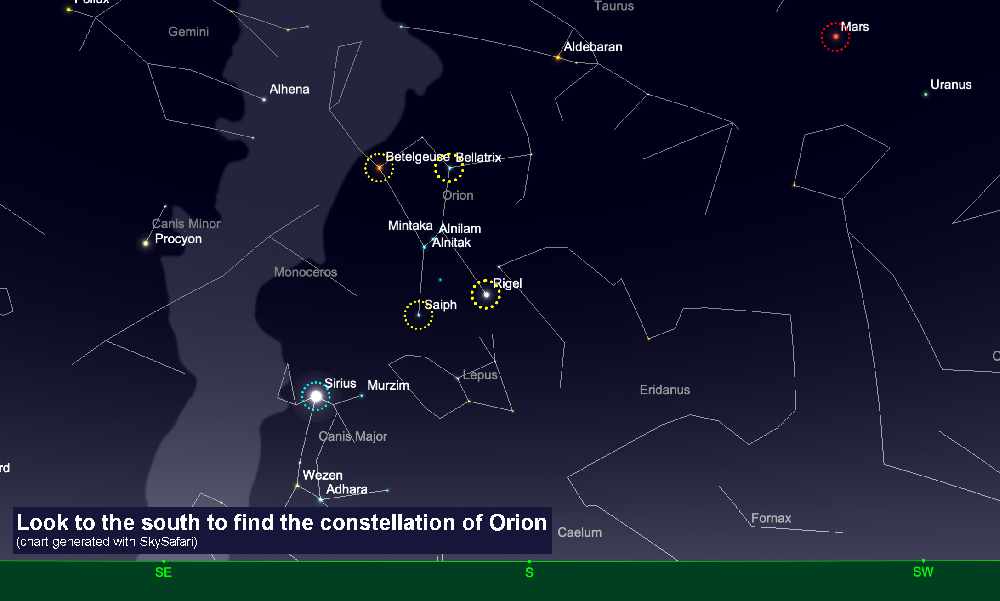
Other objects in space you might spot include the red planet, Mars. If you look to the left and down a little, you will also see the brightest star in the night sky, Sirius.
 Plans to improve the gene pool of the Royal Golden Guernsey Goat
 Fog causes flight chaos at Guernsey Airport
 Channel Islanders asked to report injured or dead seabirds
 More than 200 emergency callouts for overflowing cesspits in Guernsey
 Guernsey Library to host Costume Creation event ahead of World Book Day
 Domino's Pizza to open in Guernsey
 Guernsey and Jersey politicians discuss air and sea links
 Britain's first astronaut to visit Guernsey