

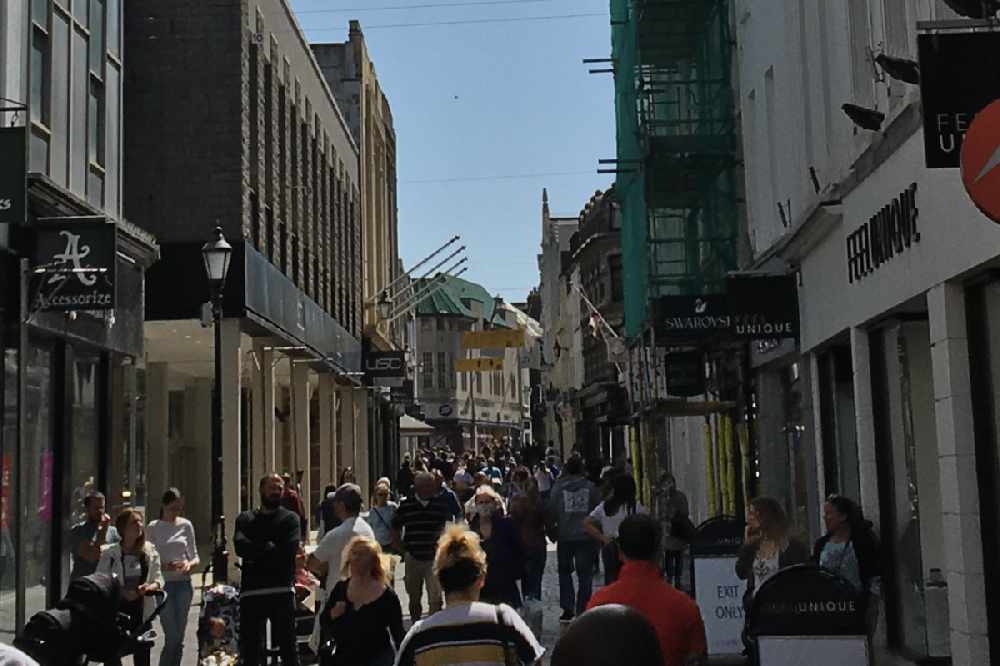
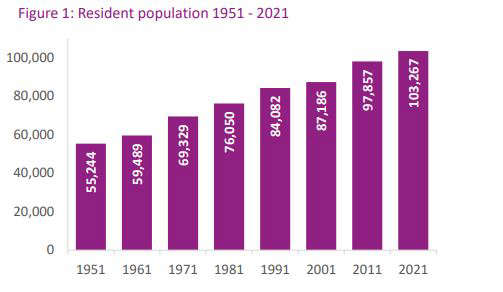
103,267 people lived in Jersey on Monday 21 March 2021.
The first census results have been published in 10 years
The population has increased by 5,400 since 2011 and is lower than the most recent estimate of 107,800 in 2019.
Of those, 3,300 people came to the island - down from 6,800 between 2001 and 2011.
3,600 people who were born in Jersey have left the island over the last decade.
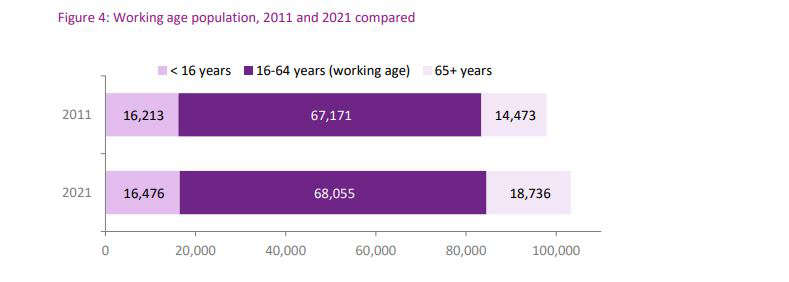
The working-age population, defined as people aged between 16 and 64, is 68,000.
The number of people aged 65 and over has increased by nearly 30 percent since 2011 - up to 18,736.
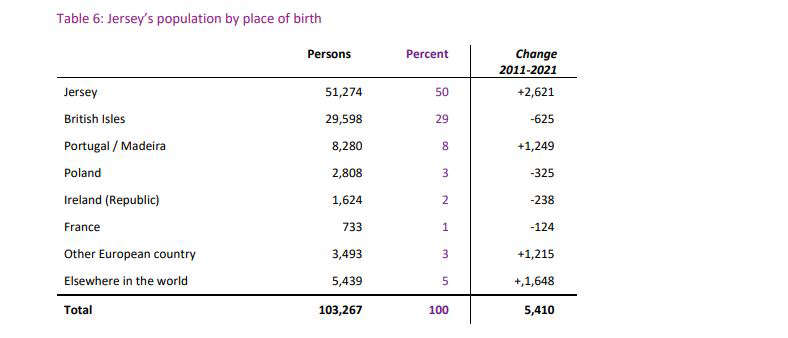
Half of Jersey residents were born in the island.
Nearly a third were born in the British Isles, 8% were born in Portugal and 3% were born in Poland.
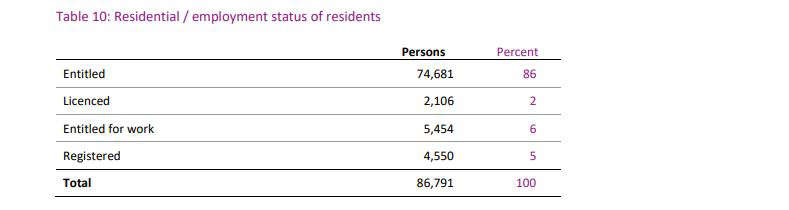
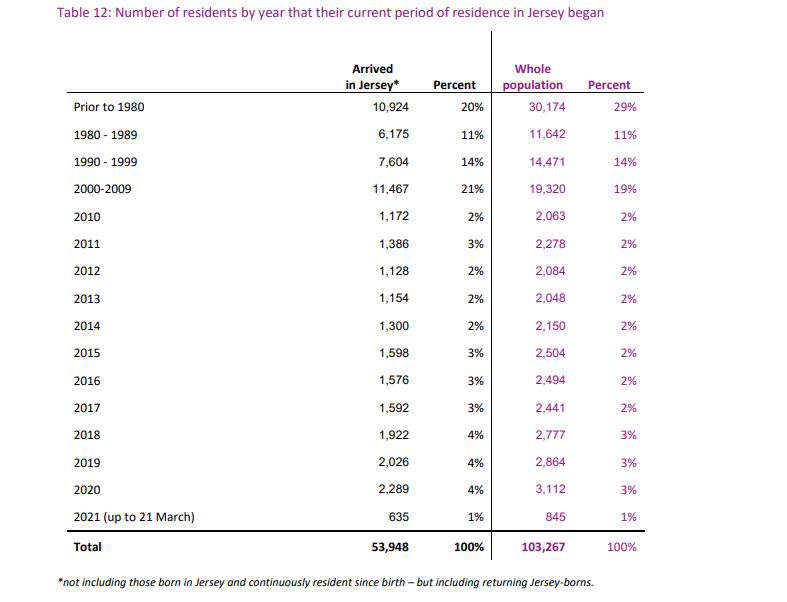
86% of adults and three-quarters of all residents have lived in Jersey for at least ten years.
4,027 houses were vacant on Census Day, a rate of 8.3%. The 2011 Census recorded 3,103 vacant houses, a rate of 6.9%.
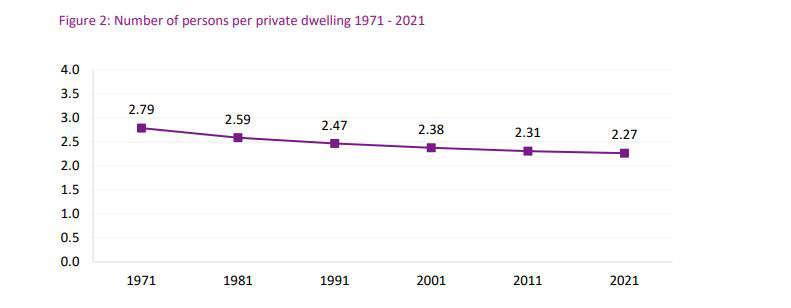
There is an average of 2.27 people per home in Jersey. That figure has been falling continually since 1971.
The largest parish population increase over the last decade was in Grouville at 11%.
At the time of the census, there were 25 people over the age of 100. Most of them were female.
87% of adults identified as straight or heterosexual. 2% identified as lesbian, gay, or bisexual.
189 people said their gender wasn't the same as it was at birth.
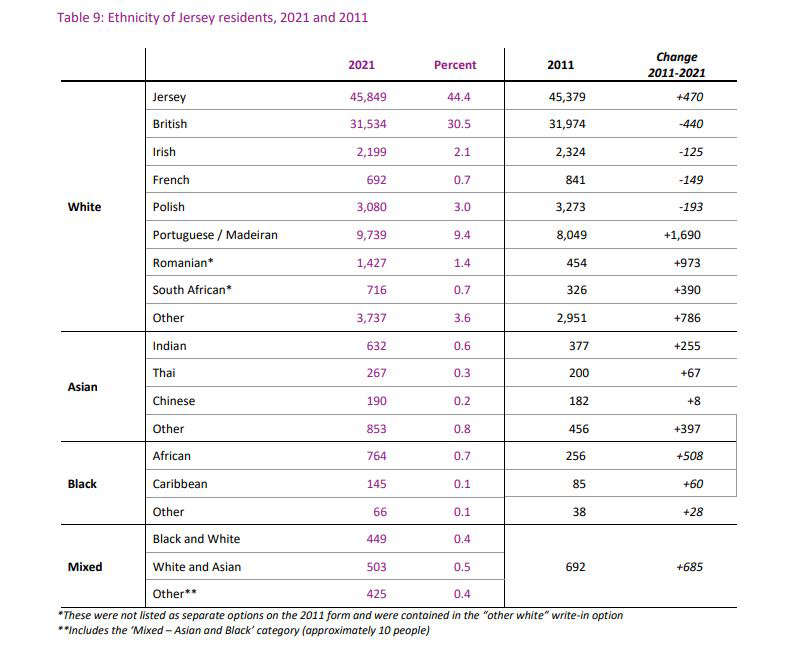
44% of Jersey residents considered their ethnicity to be 'Jersey'. Almost a third said they were 'British'.
More census results are due to be published before June's election.
 Three charities awarded £500 grants in community campaign
 Ministers back principle of social media 'restrictions' for under 16s
 Passengers rerouted through Jersey Airport departures
 A total ban on disposable vapes in Guernsey and Jersey is poised to take full effect
 Divide over approach to gender guidance in schools
 Islanders with COVID-19 symptoms reminded to avoid the hospital
 2025 was the fourth warmest year on record
 Review suggests parental leave for grandparents